Application Guide
Define the thread and hole condition
Record the thread standard, nominal size, pitch, tolerance class, engagement length and whether the hole is through or blind. The drilled hole size, chamfer, alignment and available chip space are part of the threading process, not separate details. Material, hardness, machine synchronization, holder type, coolant and production volume further narrow the choice.
Choose the tool family and chip direction
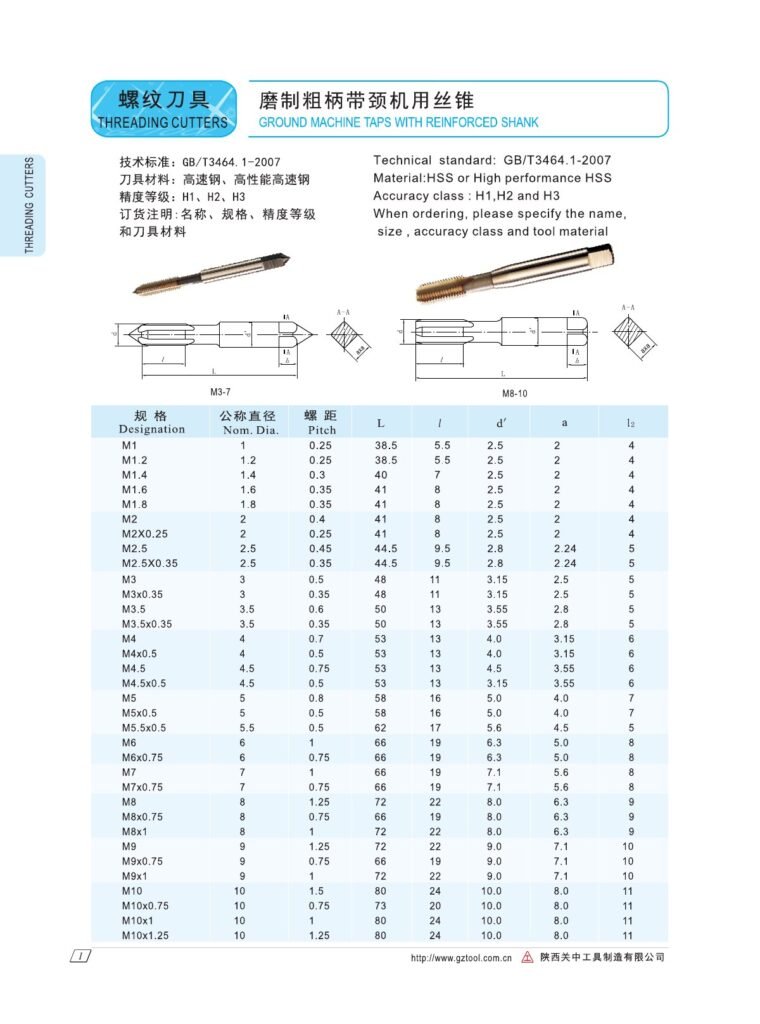
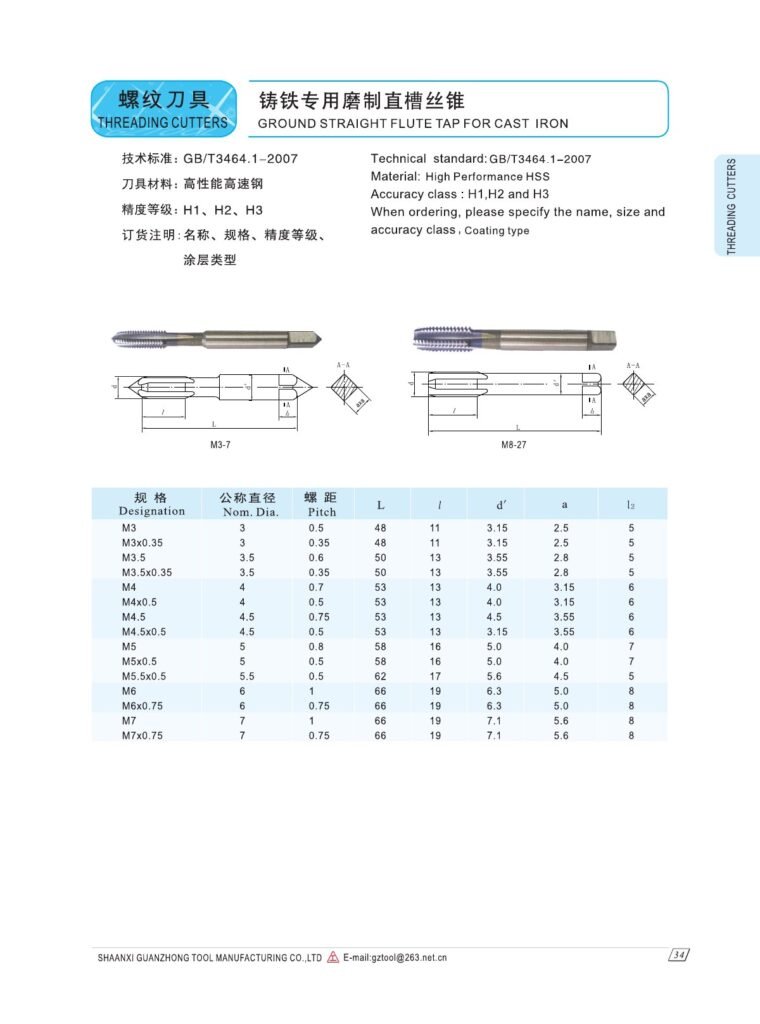
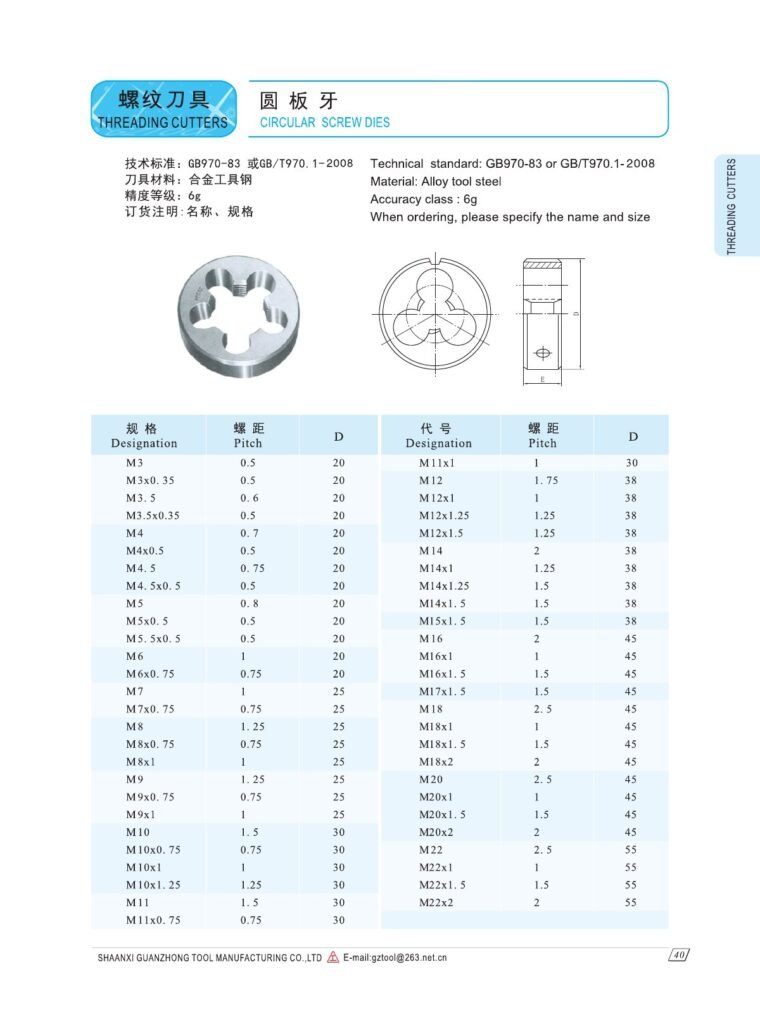
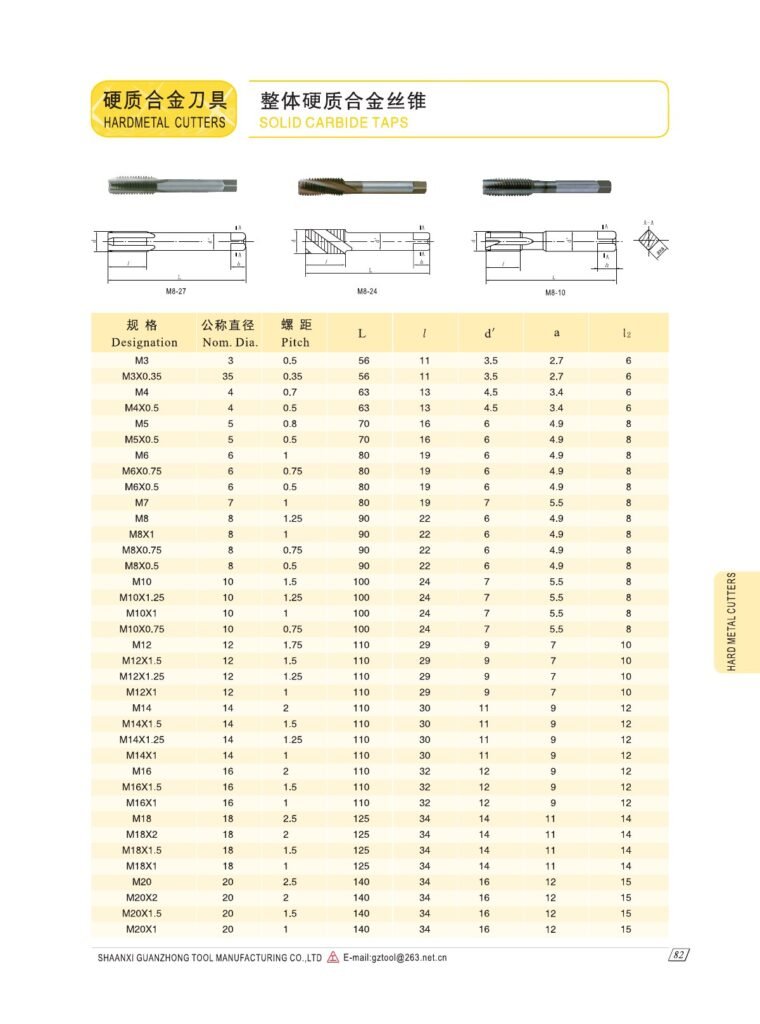
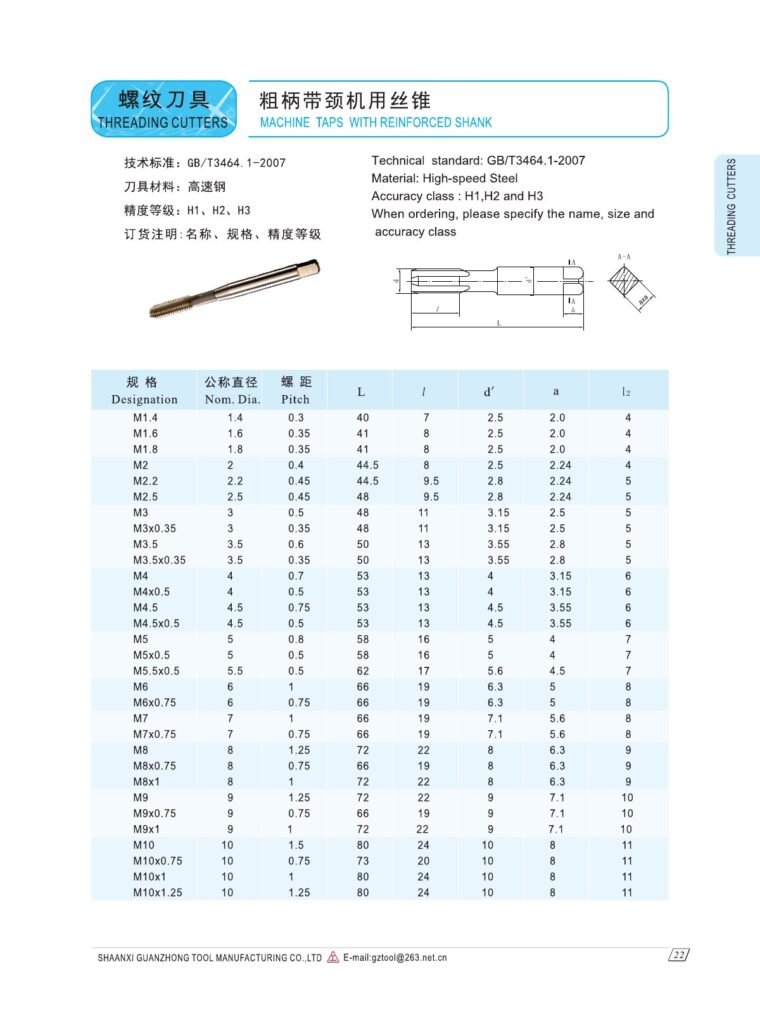
The GUANZHONG catalogue includes ground machine taps, general machine taps, specialized high-performance taps, carbide taps and circular screw dies. Select the exact model by thread form, geometry and dimensional table. Through-hole and blind-hole work may require different chip control, while abrasive or hard materials can change the balance between wear resistance and toughness.
Stabilize the tapping process
- Verify the pre-drilled hole, chamfer and workholding before blaming the tap.
- Check holder alignment, axial movement and programmed feed against spindle synchronization.
- Use a lubricant or coolant suited to the workpiece and the selected tool.
- Track torque, thread gauge result, edge wear and the point at which performance begins to drift.
Broken taps and poor threads often reflect the complete setup rather than one isolated tool feature. Provide the thread specification, hole type, material, machine, current tap designation and failure pattern for a controlled recommendation.