Application Guide
Define the milling operation before choosing a cutter
Begin with the feature: slot, shoulder, profile, keyway or another specified geometry. Record the workpiece material and condition, feature dimensions, tolerance, required surface, corner radius and the amount of stock to remove. Machine taper, holder type, available spindle speed, power, coolant and allowable tool overhang set the practical limits for the cutter.
Match geometry and rigidity
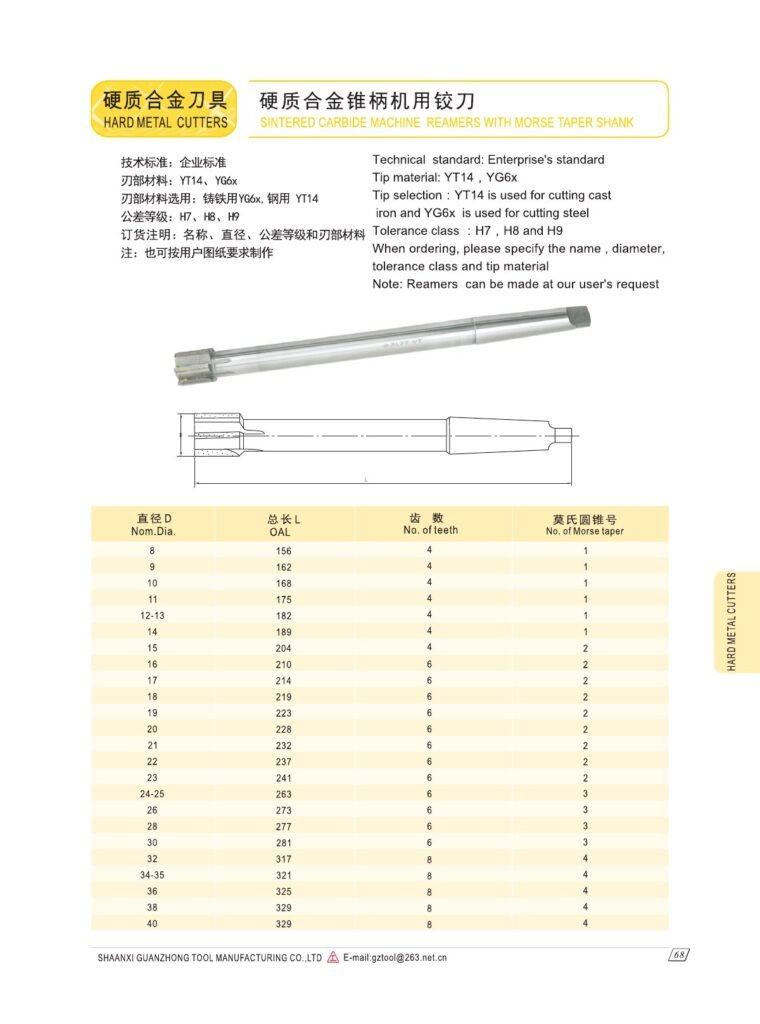
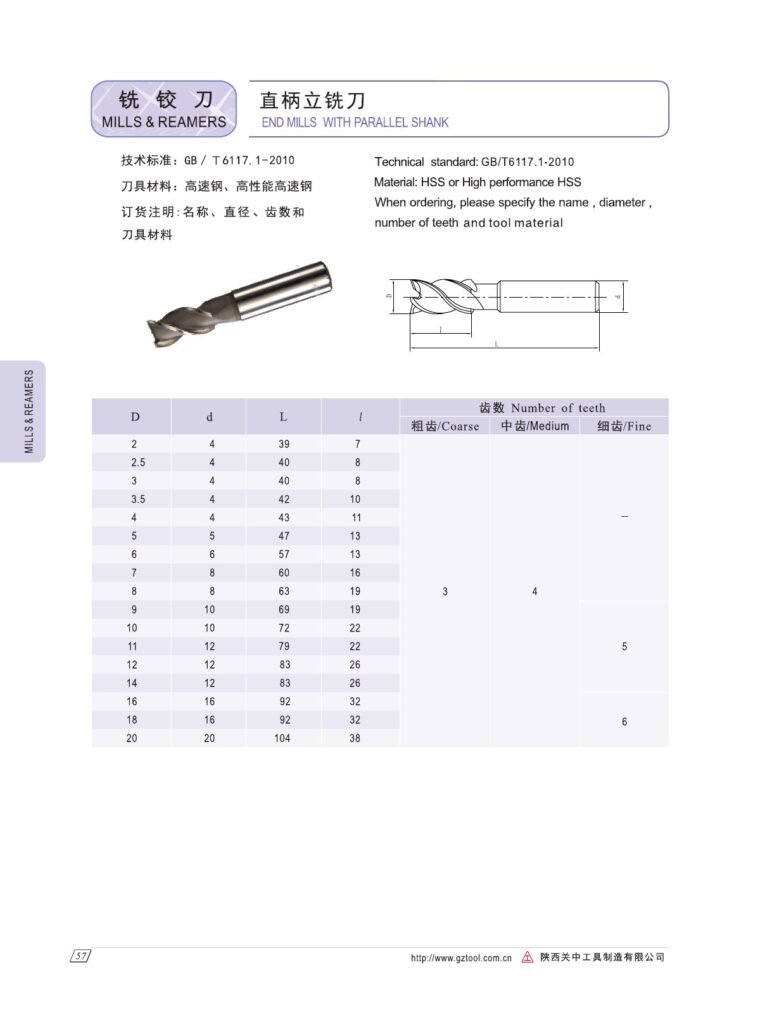
The GUANZHONG catalogue contains high-speed-steel milling cutter families arranged by cutter geometry and dimensional tables, together with hardmetal mills for production machining. Use the catalogue designation only after confirming diameter, cutting length, shank or bore interface and reach. Choose the shortest stable assembly that clears the feature, and avoid treating a catalogue family name as a substitute for the full model specification.
Run a controlled trial
- Establish a safe starting point from the current manufacturer data for the exact model and workpiece.
- Check runout, holder condition, workholding and chip evacuation before increasing output.
- Change one important variable at a time and record cycle time, edge condition, surface and tool wear.
- Stop if chatter, built-up edge, abnormal temperature or dimensional drift appears.
A useful enquiry includes the part drawing, material, machine and holder, current cutter, present cutting conditions and the result that needs improvement. Final cutting data must be confirmed for the selected model and real setup.